Portable UV analyzers have become essential tools in laboratories, water quality monitoring, jewelry screening, food safety, and industrial UV applications. As on-site analysis continues to grow in 2026, handheld and portable UV analyzers offer fast, reliable, and mobile solutions.
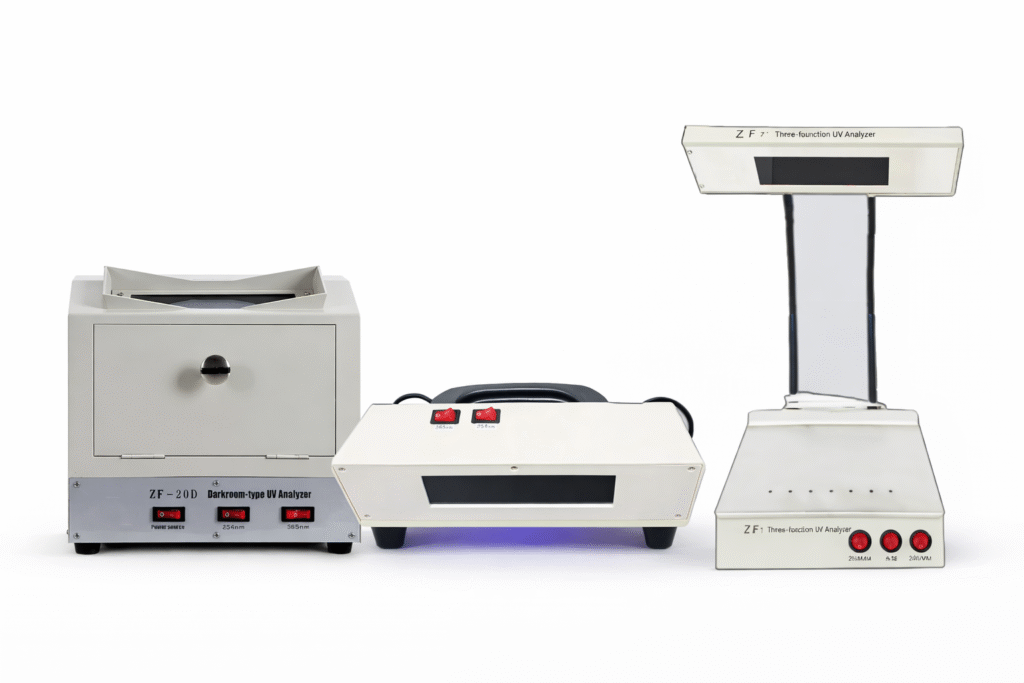
Many users ask:
- What is a portable UV analyzer, and how does it differ from a handheld UV lamp?
- Should I choose 254nm or 365nm for my application?
- Which models are worth buying: ZF-7A, WFH-204B, UV254 Go!, Chemtrac UVP1000, Real Tech P Series?
- Why are prices so variable, from $20 to over $5,000?
This guide covers principles → applications → types → recommended models → pitfalls → safety → FAQs, updated for 2026.
What Is a Portable UV Analyzer? Differences from Handheld & Benchtop Devices
A portable UV analyzer emits ultraviolet light (typically 254nm or 365nm) to excite fluorescence or absorption in samples, enabling rapid qualitative or semi-quantitative analysis.
| Device Type | Key Features | Suitable Users |
|---|---|---|
| Handheld UV lamp | Basic UV light, dual 254/365nm | Jewelry, field inspection |
| Portable UV analyzer (dark box/filtered) | Filters, optional dark box, measurement logic | Labs, field testing |
| Benchtop UV analyzer | High precision, stable, not portable | Fixed labs |
| UV sterilization lamp | For sterilization, not analysis | ❌ Not suitable |
Note: Portable UV analyzers are NOT sterilization lamps. Confusing the two is a common buyer mistake.
How Portable UV Analyzers Work: 254nm vs 365nm
Portable UV analyzers rely on wavelength selection + fluorescence/absorbance detection.
254nm UV Analyzer (Shortwave, UV-C)
- Applications: TLC spot visualization, water quality UV254, DNA/RNA gel observation
- Characteristics: Strong excitation; high eye/skin hazard; requires filter/dark box
365nm UV Analyzer (Longwave, UV-A)
- Applications: Jewelry screening, basic skin/fungi detection, food/drug fluorescence
- Characteristics: Safer for eyes; direct fluorescence visualization; ideal for on-site screening
Quick Recommendation:
- Lab/water analysis → 254nm essential
- Jewelry/basic screening → 365nm sufficient
- General purpose → dual wavelength 254+365nm analyzer
8 Main Applications of Portable UV Analyzers
- Thin-Layer Chromatography (TLC) – 254nm visualizes compound spots on silica plates
- DNA/RNA Gel Observation – Dual/tri-wavelength analyzers with dark box improve lab efficiency
- Water Quality Testing – UV254 and UVT readings for organics, COD/TOC correlation
- Jewelry Screening – 365nm fluorescence for basic authenticity checks (XRF preferred for precise metal composition)
- Food & Drug Screening – Detect aflatoxins, coating uniformity, or foreign substances
- UV Curing / Industrial Coatings – Monitor UV dose for inks, coatings, electronics
- Environmental Monitoring – Field detection of fluorescent pollutants or contaminants
- Medical / Dermatology – 365nm for fungi, porphyrin, and skin condition screening
Common Types of Portable UV Analyzers (2026 Prices & Features)
| Type | Price Range (USD) | Features | Suitable Users |
|---|---|---|---|
| Handheld UV lamp | $20–$100 | Basic dual 254/365nm | Jewelry, basic field use |
| Dark box portable | $80–$500 | Filters, multi-wavelength | Lab, TLC, screening |
| Smart UV dose / App | $500–$1,500+ | Data logging, industrial | UV curing, professional use |
| UV254 water analyzer | $1,500–$5,000+ | Precision UVT/UVA, no reagents | Water plants, labs |
| Multi-wavelength analyzer | $200–$1,000 | Versatile for lab & field | Comprehensive users |
Visual recommendations: TLC plates under 254nm, jewelry fluorescence under 365nm, handheld devices, dark box opened, water testing field setup, UV254 Go! / Chemtrac meters.
2026 Recommended Models by Budget
💰 Entry-Level ($20–$100 / ¥100–500)
- Models: ZF-7A, WFH-204B, Qiwei WFH series
- Dual 254+365nm, handheld or small dark box
- Use: Student TLC, gel visualization, basic jewelry fluorescence
- Lamp life: 2,000–5,000 hours
- Example photo: handheld UV lamp with TLC plate spots
💰 Mid-Range ($100–$500 / ¥500–1,500)
- Models: Dark box tri-/quad-wavelength (Qiwei, Lichen, Spectroline-style)
- Features: Filtered dark box, 2–3 wavelengths
- Use: TLC + jewelry fluorescence + rough water screening
- Example photo: dark box open showing gemstone fluorescence
💰 High-End / Professional ($1,500–$5,000+ / ¥10,000+)
- Models: UV254 Go! (Photonic Measurements), Chemtrac UVP1000, Real Tech P Series
- Features: High-precision, portable, UVT/UVA, data logging, Bluetooth export
- Use: Water quality monitoring, UV254/UVT analysis, industrial UV dose checks
- Example photo: field water sample testing with UV254 Go!
Note: Prices are approximate 2026 market averages; check current listings on Amazon, eBay, or official sites.
6 Common Pitfalls When Buying
- Confusing UV sterilization lamps with analytical UV analyzers
- Using 254nm lamps without filters or dark box
- Judging quality by wattage only
- Buying extremely cheap, unbranded devices
- Ignoring lamp lifespan (choose replaceable lamps)
- Over-relying on UV for jewelry authentication (consider XRF for metal purity)
Safety Guidelines
- Always wear UV protective glasses for 254nm
- Avoid direct eye exposure and prolonged skin contact
- Use filters or dark boxes for strong UV
- Turn off after use to extend lamp life
Frequently Asked Questions (FAQ)
- Can portable UV analyzers measure fluorescent dyes? – 365nm can screen; quantitative analysis requires lab instruments
- How is UV254 related to COD/TOC? – Strong positive correlation; often used as surrogate
- Are UV analyzers the same as sterilization lamps? – No
- How harmful is 254nm to the eyes? – Direct exposure can cause serious damage
- What is lamp lifespan? – Typically 2,000–5,000 hours; choose replaceable lamps
- Can 365nm detect fake gemstones? – Yes, basic screening only
- Can TLC and DNA gel observation be combined? – Yes, dual/tri-wavelength devices cover both
- Are Bluetooth/data logging features necessary? – Useful for professional water/industrial monitoring
- Can UV analyzers measure UV dose for curing? – Only models with built-in dose meters
- How portable are these devices? – Handheld <500g, water meters 1–3kg
- Is UV sufficient for professional jewelry testing? – Good for fluorescence screening; XRF analyzers provide precise elemental composition
Conclusion & CTA
The right portable UV analyzer depends on budget and intended use:
💡 Please let us know your budget and intended application in the form, and we can recommend the most suitable model, avoiding common pitfalls.

The Role of Benchtop Water Vacuum Pumps in Chemical Labs
The Benchtop Water Vacuum Pump for Chemical Labs from Equilrxnlab offers high-performance vacuum support with a flow rate of 60L/min and a 15L water tank. Ideal for various laboratory applications, it ensures reliable and efficient results. Explore its full features today.
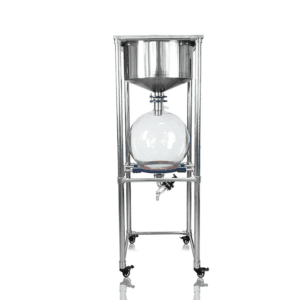
Industrial Filtration Apparatus: Essential Equipment for Efficient Solid-Liquid Separation
Learn about the Industrial Filtration Apparatus from Equilrxnlab, designed for large-scale solid-liquid separation. With a 30L capacity and durable materials, it’s ideal for chemical, pharmaceutical, and environmental industries.