Portable UV analyzers have become essential tools in laboratories, water quality monitoring, jewelry screening, food safety, and industrial UV applications. As on-site analysis continues to grow in 2026, handheld and portable UV analyzers offer fast, reliable, and mobile solutions.
Many users ask:
- What is a portable UV analyzer, and how does it differ from a handheld UV lamp?
- Should I choose 254nm or 365nm for my application?
- Which models are worth buying: ZF-7A, WFH-204B, UV254 Go!, Chemtrac UVP1000, Real Tech P Series?
- Why are prices so variable, from $20 to over $5,000?
This guide covers principles → applications → types → recommended models → pitfalls → safety → FAQs, updated for 2026.
What Is a Portable UV Analyzer? Differences from Handheld & Benchtop Devices
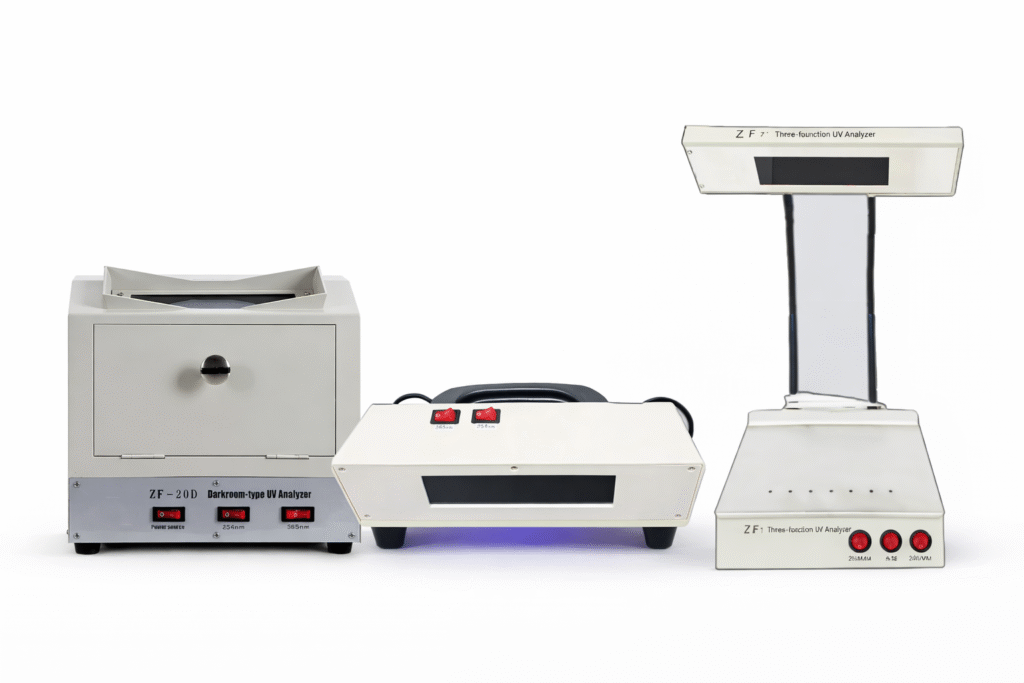
A portable UV analyzer emits ultraviolet light (typically 254nm or 365nm) to excite fluorescence or absorption in samples, enabling rapid qualitative or semi-quantitative analysis.
| Device Type | Key Features | Suitable Users |
|---|---|---|
| Handheld UV lamp | Basic UV light, dual 254/365nm | Jewelry, field inspection |
| Portable UV analyzer (dark box/filtered) | Filters, optional dark box, measurement logic | Labs, field testing |
| Benchtop UV analyzer | High precision, stable, not portable | Fixed labs |
| UV sterilization lamp | For sterilization, not analysis | ❌ Not suitable |
Note: Portable UV analyzers are NOT sterilization lamps. Confusing the two is a common buyer mistake.
How Portable UV Analyzers Work: 254nm vs 365nm
Portable UV analyzers rely on wavelength selection + fluorescence/absorbance detection.
254nm UV Analyzer (Shortwave, UV-C)
- Applications: TLC spot visualization, water quality UV254, DNA/RNA gel observation
- Characteristics: Strong excitation; high eye/skin hazard; requires filter/dark box
365nm UV Analyzer (Longwave, UV-A)
- Applications: Jewelry screening, basic skin/fungi detection, food/drug fluorescence
- Characteristics: Safer for eyes; direct fluorescence visualization; ideal for on-site screening
Quick Recommendation:
- Lab/water analysis → 254nm essential
- Jewelry/basic screening → 365nm sufficient
- General purpose → dual wavelength 254+365nm analyzer
8 Main Applications of Portable UV Analyzers
- Thin-Layer Chromatography (TLC) – 254nm visualizes compound spots on silica plates
- DNA/RNA Gel Observation – Dual/tri-wavelength analyzers with dark box improve lab efficiency
- Water Quality Testing – UV254 and UVT readings for organics, COD/TOC correlation
- Jewelry Screening – 365nm fluorescence for basic authenticity checks (XRF preferred for precise metal composition)
- Food & Drug Screening – Detect aflatoxins, coating uniformity, or foreign substances
- UV Curing / Industrial Coatings – Monitor UV dose for inks, coatings, electronics
- Environmental Monitoring – Field detection of fluorescent pollutants or contaminants
- Medical / Dermatology – 365nm for fungi, porphyrin, and skin condition screening
Common Types of Portable UV Analyzers (2026 Prices & Features)
| Type | Price Range (USD) | Features | Suitable Users |
|---|---|---|---|
| Handheld UV lamp | $20–$100 | Basic dual 254/365nm | Jewelry, basic field use |
| Dark box portable | $80–$500 | Filters, multi-wavelength | Lab, TLC, screening |
| Smart UV dose / App | $500–$1,500+ | Data logging, industrial | UV curing, professional use |
| UV254 water analyzer | $1,500–$5,000+ | Precision UVT/UVA, no reagents | Water plants, labs |
| Multi-wavelength analyzer | $200–$1,000 | Versatile for lab & field | Comprehensive users |
Visual recommendations: TLC plates under 254nm, jewelry fluorescence under 365nm, handheld devices, dark box opened, water testing field setup, UV254 Go! / Chemtrac meters.
2026 Recommended Models by Budget
💰 Entry-Level ($20–$100 / ¥100–500)
- Models: ZF-7A, WFH-204B, Qiwei WFH series
- Dual 254+365nm, handheld or small dark box
- Use: Student TLC, gel visualization, basic jewelry fluorescence
- Lamp life: 2,000–5,000 hours
- Example photo: handheld UV lamp with TLC plate spots
💰 Mid-Range ($100–$500 / ¥500–1,500)
- Models: Dark box tri-/quad-wavelength (Qiwei, Lichen, Spectroline-style)
- Features: Filtered dark box, 2–3 wavelengths
- Use: TLC + jewelry fluorescence + rough water screening
- Example photo: dark box open showing gemstone fluorescence
💰 High-End / Professional ($1,500–$5,000+ / ¥10,000+)
- Models: UV254 Go! (Photonic Measurements), Chemtrac UVP1000, Real Tech P Series
- Features: High-precision, portable, UVT/UVA, data logging, Bluetooth export
- Use: Water quality monitoring, UV254/UVT analysis, industrial UV dose checks
- Example photo: field water sample testing with UV254 Go!
Note: Prices are approximate 2026 market averages; check current listings on Amazon, eBay, or official sites.
6 Common Pitfalls When Buying
- Confusing UV sterilization lamps with analytical UV analyzers
- Using 254nm lamps without filters or dark box
- Judging quality by wattage only
- Buying extremely cheap, unbranded devices
- Ignoring lamp lifespan (choose replaceable lamps)
- Over-relying on UV for jewelry authentication (consider XRF for metal purity)
Safety Guidelines
- Always wear UV protective glasses for 254nm
- Avoid direct eye exposure and prolonged skin contact
- Use filters or dark boxes for strong UV
- Turn off after use to extend lamp life
Frequently Asked Questions (FAQ)
- Can portable UV analyzers measure fluorescent dyes? – 365nm can screen; quantitative analysis requires lab instruments
- How is UV254 related to COD/TOC? – Strong positive correlation; often used as surrogate
- Are UV analyzers the same as sterilization lamps? – No
- How harmful is 254nm to the eyes? – Direct exposure can cause serious damage
- What is lamp lifespan? – Typically 2,000–5,000 hours; choose replaceable lamps
- Can 365nm detect fake gemstones? – Yes, basic screening only
- Can TLC and DNA gel observation be combined? – Yes, dual/tri-wavelength devices cover both
- Are Bluetooth/data logging features necessary? – Useful for professional water/industrial monitoring
- Can UV analyzers measure UV dose for curing? – Only models with built-in dose meters
- How portable are these devices? – Handheld <500g, water meters 1–3kg
- Is UV sufficient for professional jewelry testing? – Good for fluorescence screening; XRF analyzers provide precise elemental composition
Conclusion & CTA
The right portable UV analyzer depends on budget and intended use:
💡 Please let us know your budget and intended application in the form, and we can recommend the most suitable model, avoiding common pitfalls.
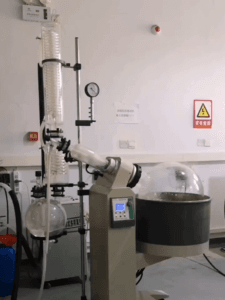
Large-Scale Rotary Evaporator with Vacuum System: The Ultimate Solution for Efficient Solvent Evaporation
The Large-Scale Rotary Evaporator with Vacuum System by EquilRxnLab provides 50L evaporation capacity, 0-120 rpm rotating speed, and precise temperature control from room temperature to 180°C. Perfect for laboratory and industrial solvent evaporation. Discover more.
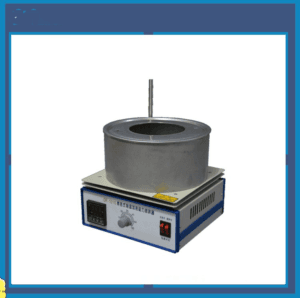
Oil Bath Magnetic Stirrer for Sample Preparation: A Comprehensive Solution
The Oil Bath Magnetic Stirrer for Sample Preparation by EquilRxnLab offers precise heating and stirring. With a 5L-15L capacity, 0-3000rpm speed range, and room temperature to 400°C temperature range, it’s perfect for laboratory sample preparation. Learn more about its features and applications.