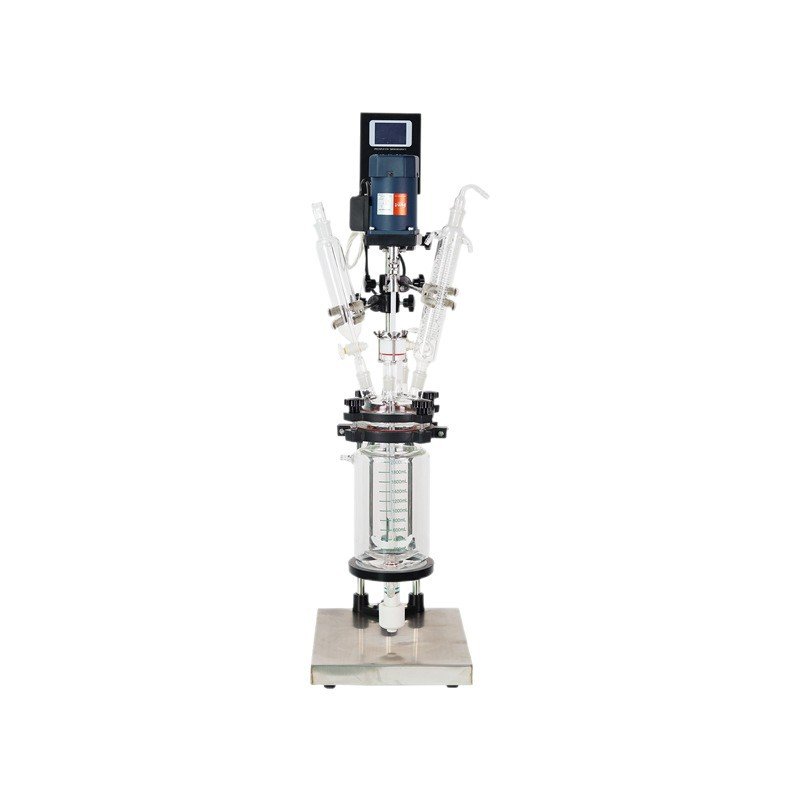
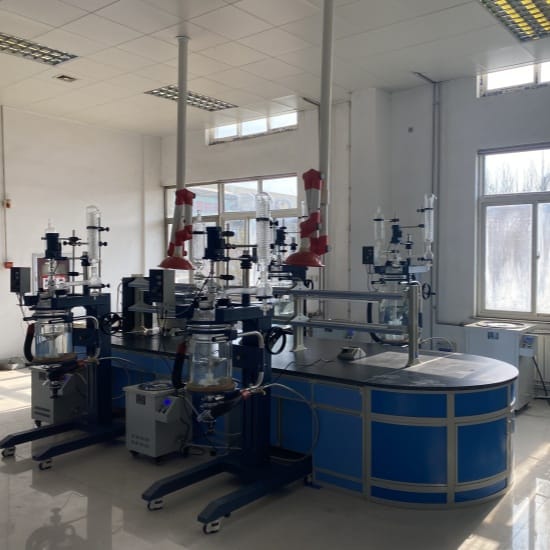
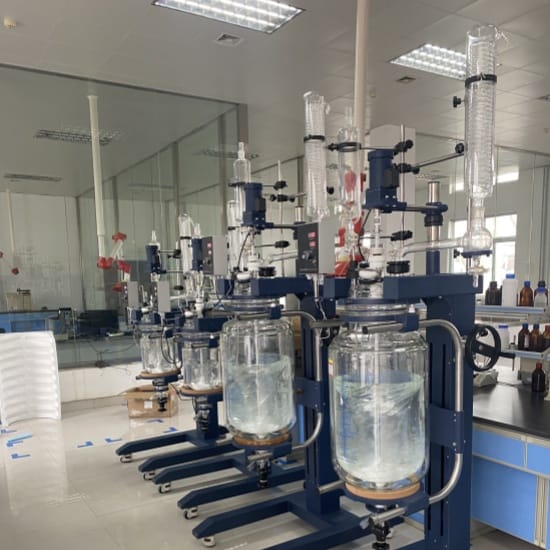
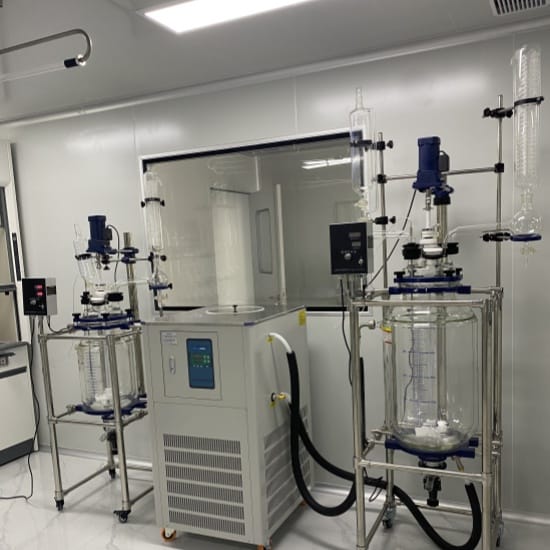
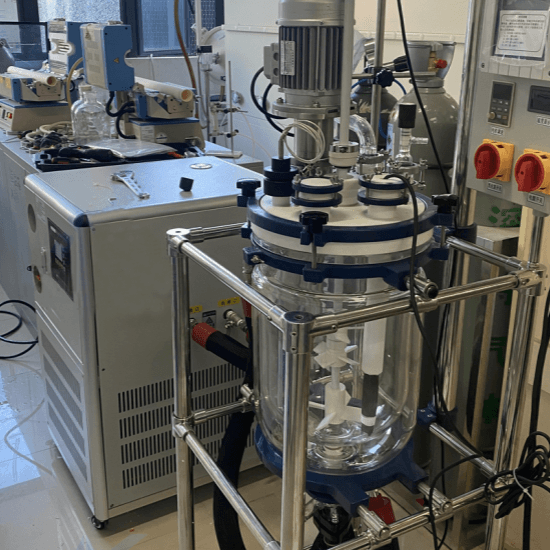
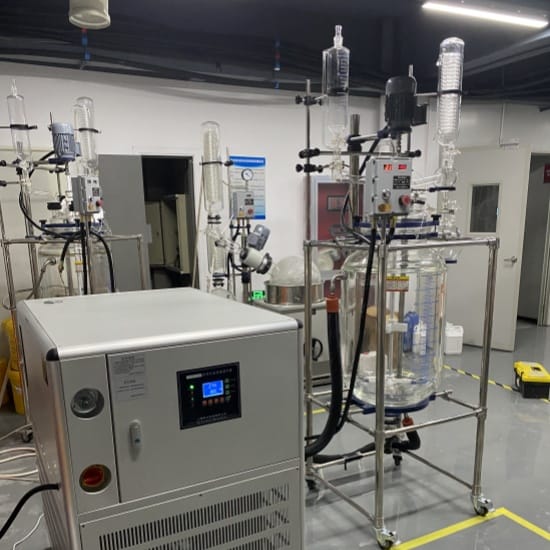
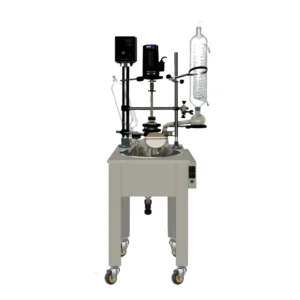
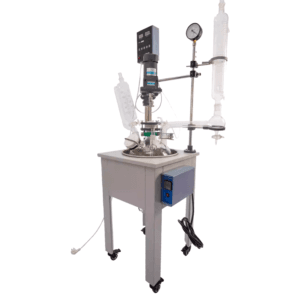
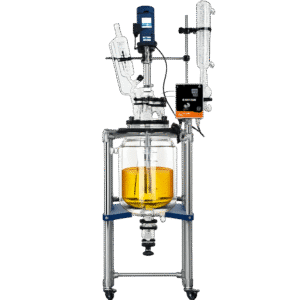
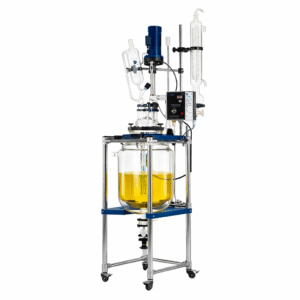
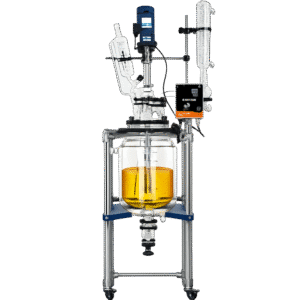
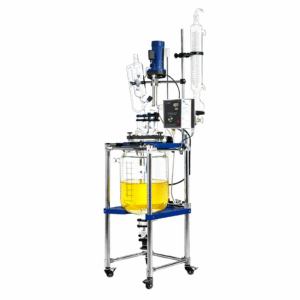
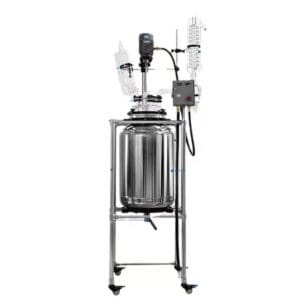
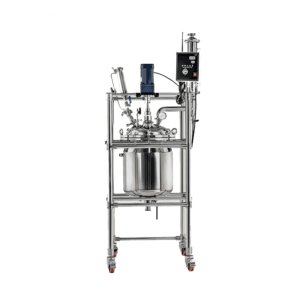
Achieve clear visibility and precise control in every reaction with our compact 3L jacketed glass reactor — designed for chemical synthesis, pharmaceutical R&D, and fine chemical development. Constructed from corrosion-resistant high-borosilicate glass with real-time 360° visual monitoring, it ensures accurate temperature control and highly reproducible results. Ideal for small-scale testing, condition screening, route optimization, and reliable process development — helping you minimize trial-and-error, reduce risk, and accelerate your R&D timeline.
The small jacketed glass reactor — also known as double layer jacketed glass reactor — is a compact, high-precision temperature-controlled stirred vessel designed for laboratory-scale chemical synthesis, pharmaceutical development, and fine chemical experiments. This 3L model features a 3L material capacity inner vessel made of high-borosilicate glass, with a 2L mezzanine jacket for efficient heating/cooling circulation. It supports precise temperature management, variable-speed stirring, and modular setups, making it ideal for a wide range of reactions including vacuum, reflux, and multi-step processes.
2. What problems does it solve for you?
In R&D, the biggest frustrations often aren’t whether a reaction can be done, but whether you can see it clearly, control it safely, test it quickly, repeat it reliably, and do it affordably. This small jacketed glass reactor is built precisely to address these real-world pain points:
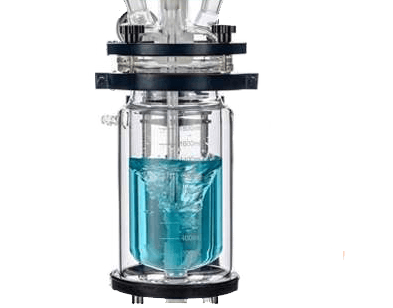
You can actually “see” and control what’s happening Are bubbles forming? Is crystallization starting? Is a side reaction occurring? The 360° transparent high-borosilicate glass vessel lets you observe phase changes, color shifts, crystal formation, precipitation, or layering in real time. For researchers, this visibility is the single most powerful way to reduce blind trial-and-error and make faster, more confident decisions.
Safe handling of highly corrosive systems Strong acids, bases, halogens, and aggressive organic solvents quickly corrode metal reactors — and stainless steel can introduce metal ion contamination that ruins purity. With high-borosilicate glass + PTFE contact surfaces, this reactor offers strong chemical inertness and no metal leaching. It’s particularly ideal for pharmaceutical intermediates, fine chemicals, and materials R&D where purity is non-negotiable.
Fast small-scale testing & process screening Is the new route feasible? Where is the operating window? Which conditions give the best yield? Quick assembly, low cost to switch reaction systems, and high flexibility make it perfect for exploratory small-scale runs, condition screening, and route comparison. It’s the ideal tool for the critical “from 0 to 1” stage of discovery and early development.
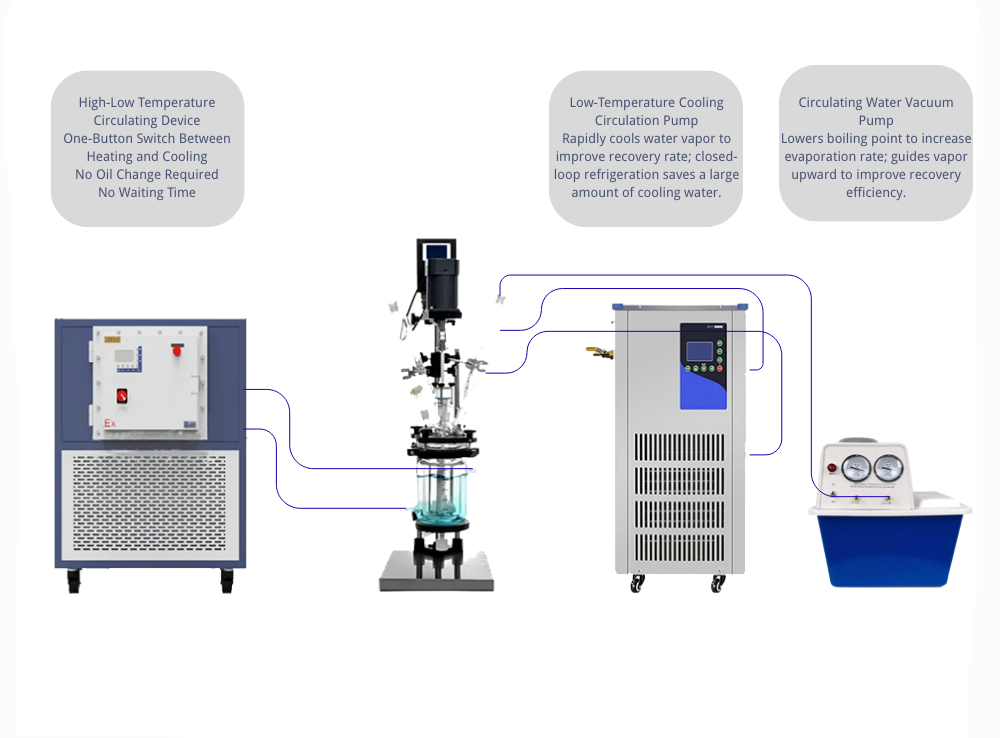
Precise temperature control for better reproducibility Exothermic/endothermic reactions often cause temperature swings, ruining reproducibility and making data unreliable. The double-layer jacket structure, paired with a recirculating chiller/heater, delivers stable constant temperature and controlled gradient heating/cooling. This is especially valuable for reactions that are highly sensitive to temperature windows, such as crystallization or selective transformations.
Significantly lower overall R&D costs Jumping straight to high-pressure stainless steel reactors is expensive and risky; many labs hesitate to use glass due to perceived fragility or pressure limitations. This jacketed glass reactor offers much lower equipment cost than stainless steel alternatives, simple maintenance, and safe operation in non-explosive environments (when properly configured). For budget-conscious R&D teams running frequent experiments, it delivers exceptional value without compromising performance.
In short: It lets you see more clearly, work more safely, test faster, repeat more reliably, and spend much less — so your time and budget go toward real innovation, not endless troubleshooting or over-engineered equipment.
3. What are the product features?
Optimized capacity & thermal control — 3L material capacity + 2L mezzanine jacket for excellent heating/cooling efficiency and uniform temperature distribution
Wide temperature range — -120°C to +300°C, suitable for cryogenic reactions, high-temperature synthesis, and everything in between
High chemical resistance — Fluorine-coated stainless steel stirring paddle withstands aggressive acids, bases, and organic solvents
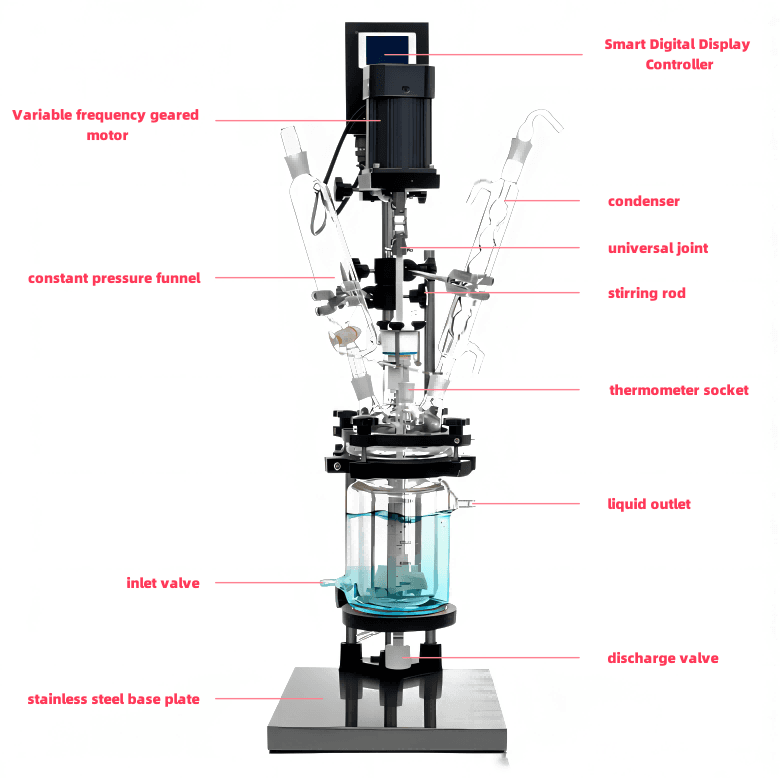
Powerful & adjustable stirring — 0–1350 rpm stepless speed control with smooth gimbal shaft connection for low-vibration, uniform mixing
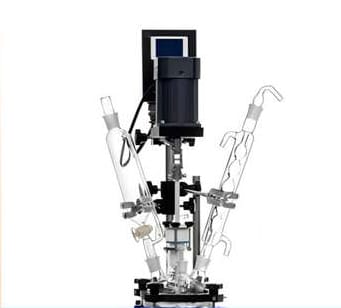
Flexible multi-port design — 5 customizable ports support dropping funnels (500 ml constant pressure funnel), sensors, sampling, vacuum lines, reflux condensers, and more
Precise monitoring — PT100 temperature probe for real-time, accurate thermal feedback
Safety upgrades — Optional explosion-proof motor and control box for hazardous environments
Enhanced stability & visibility — Compact small design ensures excellent mechanical stability and clear observation of reactions
Easy maintenance options — Optional insulated jacket/cover and spray cleaning device for reduced heat loss, condensation control, and quick cleanup
Compatible Equipment Suggestions
Recirculating Chiller — Provides precise jacket temperature control for exothermic/endothermic reactions.
Looking for other volumes or configurations? Browse the complete Jacketed Glass Reactor Series — including 1L, 2L, 5L, 10L and more.
Need custom port layout, specialized stirring paddle, explosion-proof rating, or other modifications? Contact us for professional recommendations and quotations.
We provide worldwide shipping for all laboratory equipment. Every order is carefully packaged to ensure safe delivery. If the item is in stock, it will be shipped within 3–7 business days after payment confirmation. For out-of-stock items, we will inform you of the estimated shipping time based on the specific product.
Shipping Methods: DHL, FedEx, UPS, or sea freight (depending on order size and destination) Estimated Delivery Time:
Asia: 5–10 business days
Europe & North America: 7–12 business days
South America & Africa: 10–15 business days
Sea freight: subject to actual transit time
Tracking: A tracking number will be provided via email once the shipment has been dispatched. Customs & Duties: Buyers are responsible for any import taxes or customs duties required by their country or region.
For bulk orders, custom packaging, or special shipping arrangements, please contact our team for personalized assistance at lab@equilrxnlab.com.
Product specifications
High Pressure Reactor 3L Specifications
Parameter
AKF-3L
Material Capacity (L)
3L
Mezzanine Capacity (L)
2
Number of Ports
5 (Customizable)
Constant Pressure Funnel
500ML
Stirring Paddle
Stainless Steel Covered with Fluorine Material
Coverage Diameter (mm)
190
Inner Cylinder Diameter (mm)
150
Outer Cylinder Diameter (mm)
200
Vessel Height (mm)
395
Rotational Speed (rpm)
0–1350
Stirring Shaft Diameter (mm)
8
Stirring Connection
Gimbal Connection
Voltage Frequency
220V / 50Hz
Temperature Range
-120°C to +300°C
Temperature Probes
PT100 Sensor Probe
Explosion-proof Control Box
Optional
Insulated Clothing
Optional
Explosion-proof Motor
Optional
introduce
Application Scenarios
Pharmaceutical Intermediate Synthesis & Early Process Development Ideal for small-to-medium scale synthesis of drug intermediates and APIs in early-stage R&D. The wide -120°C to +300°C temperature range and precise PT100 control ensure high reproducibility and purity while accelerating condition screening and process optimization.
Low-Temperature Grignard, Organometallic & Cryogenic Reactions Perfect for reactions requiring sub-zero temperatures (e.g., -78°C or lower). The stable cryogenic performance and fluorine-coated stirring paddle provide safe, reliable operation with highly reactive and corrosive reagents.
High-Temperature Organic Synthesis & Solvothermal Reactions Well-suited for polymerization, solvothermal synthesis, and other high-heat processes up to +300°C. The efficient jacket design (with optional insulation) maintains uniform temperature and minimizes energy loss during long runs.
Distillation, Reflux & Solvent Recovery Easily configured with condensers, receivers, and vacuum lines for atmospheric/ reduced-pressure distillation and solvent recycling. The five customizable ports make it simple to set up reflux, fractionation, and collection systems.
Crystallization & Polymorph Control Critical for achieving controlled crystal size, morphology, and high purity. Precise temperature gradients and adjustable 0–1350 rpm stirring allow fine-tuned supersaturation and reproducible crystallization results.
Multi-Step Reactions & Condition Screening Supports sequential reactions, reagent addition, and parameter exploration. The flexible port layout and quick assembly enable fast switching between different reaction systems and conditions.
Lab-Scale Process Validation & Scale-Up Bridge Generates representative data at 3L scale that bridges early lab experiments to pilot/production. Helps reduce scale-up risks, minimize costly re-optimization, and shorten development timelines.
These represent the most common applications of the 3L jacketed glass reactor in pharmaceutical, fine chemical, and materials R&D. If your process involves specialized requirements (e.g., photocatalysis, gas-liquid reactions, or high-viscosity systems), feel free to contact us for compatibility evaluation and customization options.
peculiarity
thickened glass reactor body
Inject Constant Temperature Circulating Liquid into the Central Layer
Regulates the Temperature Inside the Reactor
Open Design
Stirring System
Custom Variable Frequency Motor, LCD Display
Stable, Can Operate Continuously
Low Noise Speed Controller, Safe
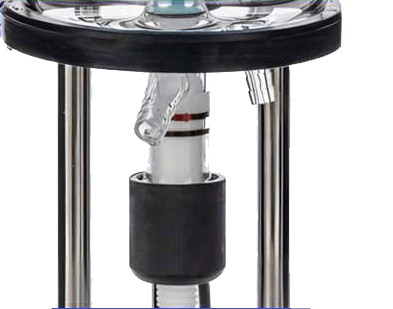
Discharge valve
Discharge valve with a glass and PTFE combination
Corrosion-resistant and non-contaminating
No residue accumulation, flow rate adjustable
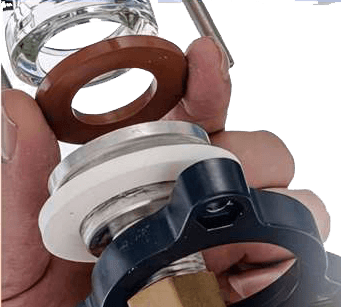
Corrosion-resistant sealing system
-0.098MPA:Uses PTFE and mechanical double-layer sealing, vacuum achievable to -0.098 MPa Non-contaminating
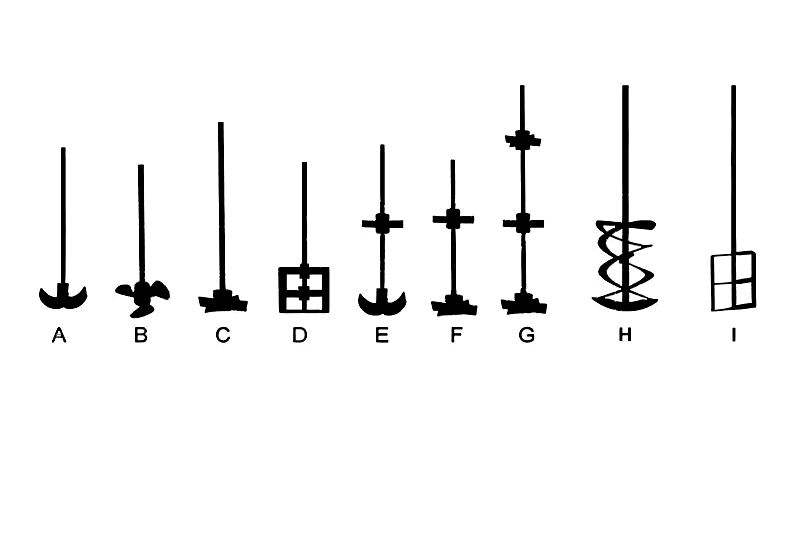
Multiple stirring paddles available for your selection
According to the different properties and viscosities of materials, a variety of stirring paddles are available for your selection. The standard configuration includes ABCD types of stirring rods, with the A-type paddle recommended for the bottle neck, and custom-made EF and G types of stirring rods are available as well